
Introduction
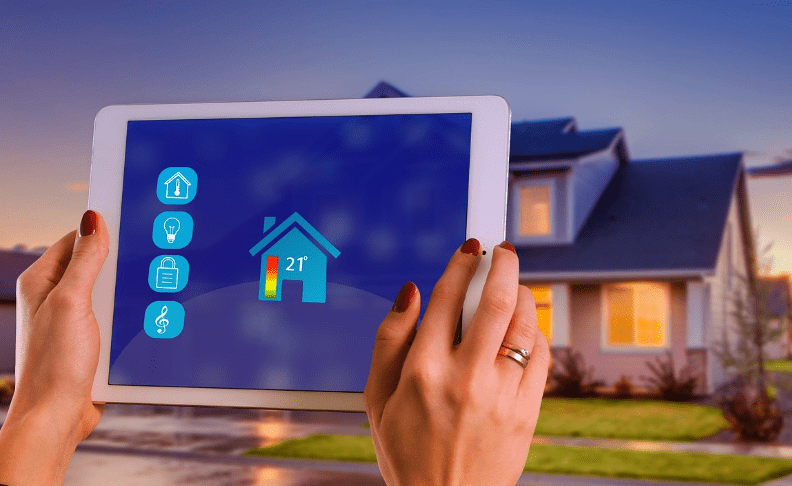
The smart home transforms traditional spaces into connected environments, offering convenience, energy efficiency and remote control from mobile devices.
Virtual assistants
Virtual assistants, such as Alexa, Google Assistant and Siri, act as the brains of the smart home, integrating devices and automating tasks.
These assistants enable actions such as turning on lights, controlling household appliances or playing music through voice commands.
Its configuration is simple and connects through mobile applications, making the technology accessible to any user.
Intelligent lighting
Smart bulbs, such as those from Philips Hue or TP-Link, offer remote control of lighting and allow you to adjust brightness and colors.
These devices help to program automatic switching on and off, reducing energy consumption and improving home security.
Smart thermostats
Thermostats such as Nest or Ecobee learn daily habits to optimize the use of heating or cooling, saving energy.
These devices can be controlled from the cell phone, allowing the temperature to be adjusted before arriving home.
Security cameras and smart doorbells
Smart cameras, such as Ring or Arlo, allow you to monitor your home in real time and receive alerts in case of suspicious movements.
Smart doorbells with integrated cameras offer live video and two-way communication with visitors, even when you are not at home.
Smart plugs and power strips
Smart plugs allow you to turn on or off connected devices from your cell phone, optimizing energy use.
These solutions are ideal for programming household appliances and improving security by simulating presence in the home.
Robotic vacuum cleaners
Robots such as Roomba or Roborock clean the home automatically, mapping areas and adapting to different surfaces efficiently.
These devices can be programmed to operate at specific times, saving time and effort in household chores.
Smart speakers and displays
Smart speakers, such as Amazon Echo or Google Nest, combine quality sound with virtual assistant integration.
Smart displays offer additional functions, such as video calls, multimedia playback and visual control of connected devices.
Benefits of the smart home
A smart home increases convenience by automating daily tasks and centralizing control from a single mobile app.
Technology also contributes to sustainability by reducing energy consumption through efficient and programmable devices.
Recommendations to get started
Start with basic devices, such as a virtual assistant and smart bulbs, to familiarize yourself with connected home technology.
Evaluate device compatibility and choose products that work together to create a seamless and efficient ecosystem.
Conclusion
Smart home technology offers convenience, security and efficiency. Adopting basic devices is the first step toward a connected home.
Incorporating this technology improves the quality of life, optimizes resources and makes it possible to enjoy a more functional and personalized environment.
Learn more http://Datasystem.es or in https://repararmac.eu/wp-admin/post.php?post=3661&action=edit