
Apple has continually transformed the retail consumer experience in its physical stores, setting new standards in design and customer service. Its progress can be segmented into several key stages:
1. Openness and the first Apple concepts (2001-2005)
- In 2001, Apple opened its first physical stores, located in Tysons Corner, Virginia, and Glendale, California.
- DesignFocused on simplicity and utility, with a minimalist layout that highlighted the products.
- User experienceGenius Bar: Implemented innovative ideas, such as the Genius Bar, to provide customized technical assistance, optimizing interaction with customers.
2. Design as a protagonist at Apple (2006-2010)
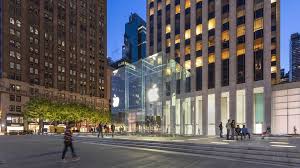
- Apple began incorporating premium materials, such as glass, steel and stone, into the design of its retail stores.
- Iconic example: The Fifth Avenue store in New York, known for its famous glass cube.
- StrategyDevelop locations that are as amazing as the products themselves, establishing the stores as iconic places.
3. Globalization and sustainability (2011-2015)
- Expansion into key global markets, such as China and the United Arab Emirates.
- Innovation in designMore extensive and luminous stores, with high ceilings and glass walls to enhance the penetration of natural light.
- Environmental commitmentApple began to incorporate sustainable components, such as solar panels and natural ventilation systems.
4. Redefining the retail experience (2016-2020).
- During Angela Ahrendts« administration, Apple turned stores into »modern plazas," places for community gathering.
- Emblematic spacesApple's stores such as Piazza Liberty in Milan and the Apple Park Visitor Center in Cupertino.
- Community activitiesPresenting «Today at Apple» sessions, free seminars that address areas such as creativity, music, programming and more.
5. Digital and physical integration (2021-present)
- The pandemic drove the merger of the online and in-store experience, through services such as «Click and Collect» and online help from retailers.
- Post-pandemic designPlaces designed to prioritize health and safety, without affecting the visual and functional experience.
Keys to its success:
- Innovative designApple collaborates with renowned architects to build stores that are masterpieces.
- Customer-centricFrom intuitive design to personalized customer service, every detail is designed to enhance the experience.
- AdaptabilityThey evolve according to global trends and consumer needs, while maintaining their essence.
Apple has transformed its stores into much more than places to shop; they are immersive experiences that reflect the brand's values and vision.
Learn more http://Datasystem.es or in https://repararmac.eu/wp-admin/post.php?post=3661&action=edit